
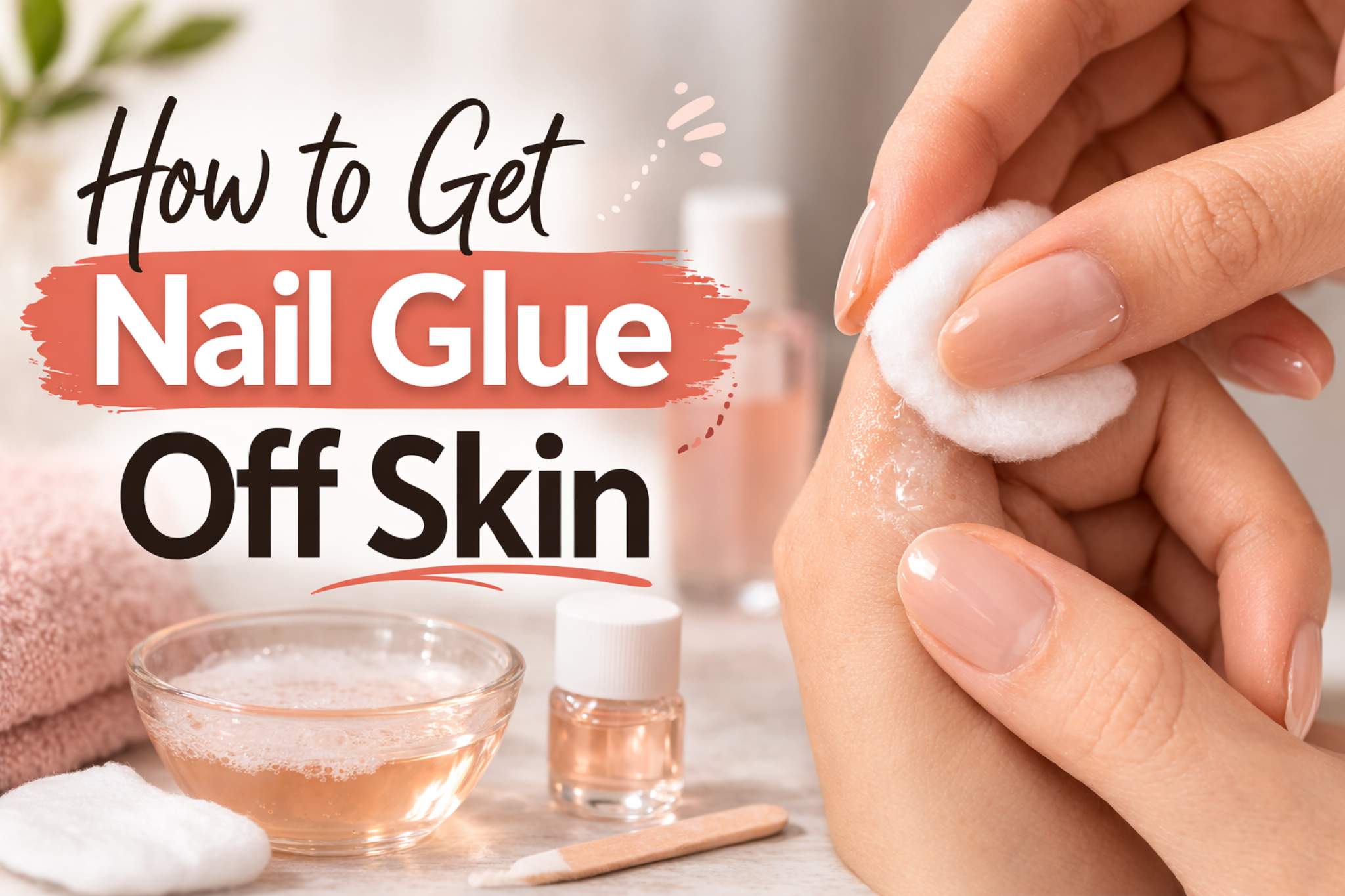
When I first started with press on nails, DIY manicure, and artificial nails, I loved that they were easy to apply, the process took half the time of a nail salon visit, and helped me save money, but one of the biggest perks also came with a downside: little mishaps with nail glue in the wrong places.
Learning how to get nail glue off skin safely is essential, because with right techniques and a bit of patience, you can remove stubborn glue without damaging your precious skin.
How to Get Nail Glue Off Skin Fast and Safely – The Answer

This comprehensive guide shares proven methods, gentle home remedies, and professional techniques used in the salon, so you can discover safe ways and effective ways to handle this common beauty blunder.
If glue gets stuck to skin, the struggle to get it off can feel like fighting a substance made to stick, especially since its strong adhesive properties help it bond nails securely.
For people who enjoy at-home manicures and quick nail repairs, this essential tool can become a common problem and a frustrating problem when it reaches unwanted areas, leaving discomfort, unsightly residue, and potential skin irritation.
Compared with other adhesives, it is often tricky to remove, and wrong methods can worsen the issue, making nail glue removal harder and harming skin health with dryness, redness, long-term sensitivity, and other side effects.
That is why the best method is a calm approach that helps unstick what should be removed, avoids irritating skin, and works effectively to keep skin smooth skin, moisturized skin, and free from harm.
In my experience, and according to nail expert-approved methods and dermatologist-friendly methods, knowing how to deal with nail glue off skin the right way makes all the difference.
Understanding Nail Glue and Why It Sticks to Skin
From personal experience and advice from experts, nail glue is primarily made of cyanoacrylate, the same powerful ingredient found in super glue, which creates incredibly strong bonds. When it touches skin, it reacts with water molecules because skin contains plenty of moisture, and this chemical reaction happens almost instantly.
At the moment, it begins forming cross-linked polymer chains that create a bond that feels practically welded to your finger. Leaving it untreated isn’t dangerous, but it can cause irritation, especially if you try to peel it forcefully. The glue will eventually wear off naturally, through skin’s normal shedding process, but waiting long isn’t always practical.
Formulated to create a long-lasting and effective bond on nails, nail glue is sticky by nature, which can make it difficult to remove. The key reason is its adhesion composition; it polymerizes quickly when exposed to moisture, and skin being naturally moist allows it to form a stubborn stick.
Even a quick application or accidental spill can make people realize how effective this bonding ingredient is, and its sensitivity to environmental factors like temperature and humidity variables can aggressively affect removal, making it challenging. Understanding these chemical interactions helps you better appreciate the delicate balance required to remove glue without harming skin.
Quick First Steps When Nail Glue Gets on Your Skin
When you find nail glue on your skin, the good news is it usually just causes minor irritation. For fresh, wet glue, immediately rinse the area with warm water and gently roll it off using your fingertip, being careful not to rub harshly; circular motions work best. For dried glue, assess the size, location, and spot, then choose a removal method based on skin sensitivity.
Gather supplies before starting the process, as the key difference lies in timing and technique: fresh glue responds to simple water and gentle manipulation, while dried glue requires more targeted approaches. Explore the next steps carefully, knowing that getting glue on parts of fingers or body together can even cause more tears.
Though uncommon, chemical burns can suffer if glue is left on skin and you don’t take immediate action. As studies from the National Center for Biotechnology Information explains, careful attention prevents damage and ensures safety.
Best Ways to Remove Nail Glue From Skin
Warm Soapy Water Soak
Fill a bowl with warm, soapy water and soak the affected area for 10-15 minutes. This gentle method works wonders for fresh or slightly dried glue. Gently massage the spot with your fingertip in circular motions, begin to soften the glue, and peel away naturally. Repeat if necessary, but don’t exceed 20 minutes. This step is perfect for sensitive skin and children.
Petroleum Jelly, Cuticle Oil, or Hand Lotion
Apply a generous amount of petroleum jelly, cuticle oil, or thick hand lotion to the glue spot, massage it for a few minutes, and let it sit to penetrate. Then, roll the softened glue off with a soft cloth. This safe way coaxes stubborn glue off skin while creating a barrier that gradually weakens the glue’s bond.
Acetone-Based Nail Polish Remover
Acetone-based nail polish remover can quickly remove glue. Soak a cotton ball or pad, hold it against the spot for 30-60 seconds, and rub in circular motions carefully, without being aggressive. Immediately wash your hands, apply moisturizer, and prevent dryness. Always follow proper aftercare, as acetone can be drying.
Natural Oils and Household Alternatives
Use olive oil, coconut oil, or household solutions like white vinegar, lemon juice, or baking soda paste to break down adhesive gently. Massage, let sit, scrape, or rub lightly to dissolve glue without harsh chemicals. These natural methods work well for sensitive skin and can be done when acetone is not available.
Let It Wear Off Naturally
For tiny spots, sometimes waiting it out is the safest approach. Moisturize the area daily, gently exfoliate during handwashing, and avoid picking or peeling. This simple method is perfect when other removal methods aren’t available, allowing the glue to wear off naturally without damage or irritation.
Final Care
After any removal, lock in moisture with a hydrating cream or lotion, nourish the skin, and restore hydration. Avoid excessive scrubbing, and test small areas if you have sensitive skin. These step-by-step methods ensure safe, effective, and gentle removal of nail glue.
What NOT to Do When Removing Nail Glue
When trying to remove nail glue from your skin, it’s important to know what NOT to do. Never peel or scrape aggressively, as this can tear the skin and cause scarring. Avoid using sharp tools like knives, razor blades, or other objects, even if they seem like quick solutions, because they are dangerous and can lead to serious injury.
Don’t soak your skin in acetone for prolonged exposure or extended periods, as it can cause dryness, cracking, and chemical burns. Always follow safety precautions, ensure proper ventilation, and keep all removal products away from children and pets. Using the right approach, taking your time, and handling the situation incredibly carefully is the best way to come off glue without harm.
How to Care for Skin Once Glue Is Removed
After the glue is gone, it’s important to care for your skin properly. First, rinse the affected area thoroughly with lukewarm water to remove any residual removal product, then wash gently using mild soap to ensure all chemicals are gone. Pat dry with a clean towel, avoiding rub or harshly actions, and apply a moisturizer while the skin is slightly damp.
For extra care, use aloe vera gel for soothing irritation, unscented hand cream for general moisturizing, cuticle oil for extra nourishment around nail areas, and healing ointments if the skin appears damaged. Continue moisturizing the area for several days, especially if you used acetone, to restore the natural barrier, which prevents dryness and cracking
FAQs
How do you get dried nail glue off your skin?
To remove glue from your skin, soak a cotton ball or pad with acetone-based nail polish remover and hold it on the spot for 30-60 seconds. Gently rub in circular motions until the glue dissolves and you can wipe it away. Then immediately wash your hands with soap and water and apply moisturizer to prevent dryness.
Does Vaseline Remove Nail Glue?
Yes, Vaseline or petroleum jelly can help remove nail glue from skin. This gentle, slower method works by penetrating the sticky glue, loosening it so it softens and rolls off or is pushed with a cuticle stick. Unlike acetone, it’s great for sensitive areas, requiring only massaging and patience, making the process less harsh for the skin by hand with care, especially compared to stronger chemicals or quick fixes.
Can rubbing alcohol remove nail glue?
Rubbing alcohol can remove nail glue by softening it, though it is less effective than acetone and gentler on skin. On fake nails, longer soaking—around 15+ mins with foil—and repeated blotting on skin/clothes is often needed. Always followed by moisturizing, this method works on stubborn spots, letting you soak, gently rub, and reapply for complete removal, especially on false nails. It’s a great, milder, and likely safer way to clean up glue.
Is nail glue remover safe?
Using nail glue remover works well, but acetone can damage skin and eyes, causing irritation, redness, itching, or burning. Repeated use may dry out nails, resulting in peeling, flaking, and making them brittle. Apply carefully and moisturize to protect the skin.