When I help friends with removing Gel polish at home, I always say the application may give that long-lasting shine, but getting it removed correctly is just as important because the risk of peeling away layers of the natural nail can lead to weakness, brittleness, and painful breaks.
How to Remove Gel Nail Polish at Home Easily – The Answer
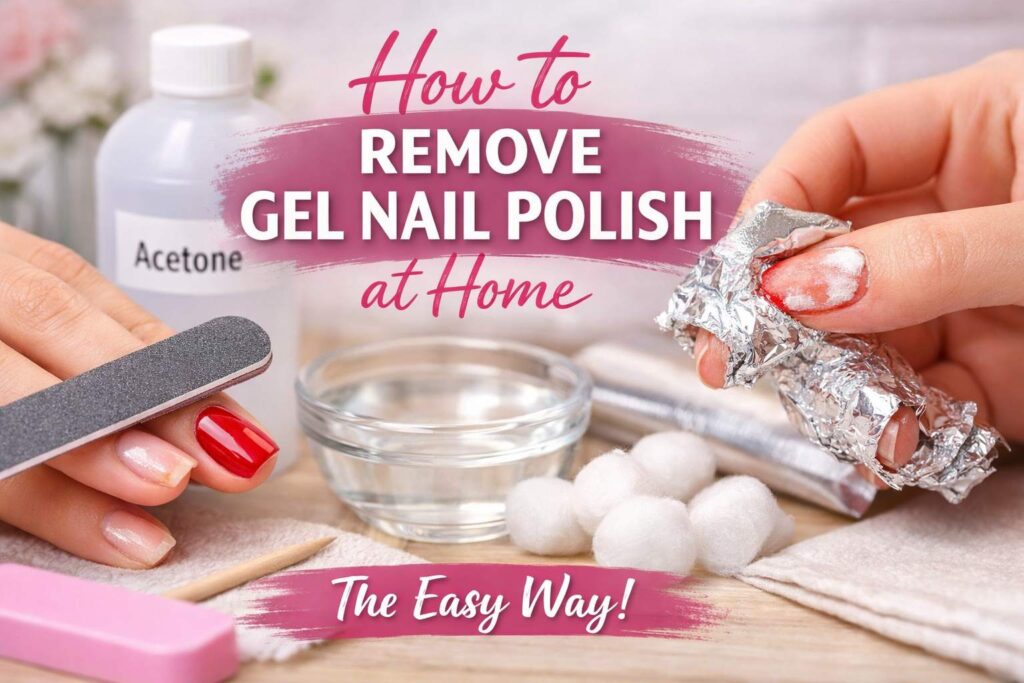
Many clients make the mistake of peeling off their manicure, and yes, I have been guilty of it too, but nail experts warn that this can cause serious damage to the nail beds, so the safest method is following expert tips to keep nails healthy while saying goodbye to an old manicure:
First file off the shiny top coat, then soak nails in 100% pure acetone for 10-20 minutes with cotton pads and foil wraps, and finally gently push off the softened polish with a wooden stick; always avoid scraping, because that kind of damage can hurt your natural nails if not done properly.
Best Methods for Removing Gel Nail Polish at Home
Acetone Soak Method
From my experience and what nail experts often suggest to clients, the acetone soak method is a tried-and-true technique and a go-to recommendation because you first file the top layer of your polish to break the seal, then soak cotton balls in 100% pure acetone, place a soaked cotton ball on each nail, wrap every fingertip with aluminum foil to hold the cotton, and wait 10-15 minutes before gently removing and removing the polish; this works because acetone breaks down the gel polish structure, making it soft enough to remove without scraping the natural nail.
Non-Acetone Alternatives
If your skin is sensitive and acetone feels too harsh, there are several gentler options that exist for gel nail polish removal. Personally, I’ve found that Acetone-free removers often take a longer time, but the results are much kinder to cuticles and the surrounding skin.
Experts recommend Natural, oil-based removers with soothing ingredients like soy, or Specialized gel removal products that come with added moisturizers. While these alternatives may require longer soaking time, they leave nails feeling soft and well-cared-for without the sting of strong chemicals.
Soak-Off Clips & Pre-Made Wraps
If the foil method feels like too much hassle, I have found that reusable soak-off clips and pre-made removal wraps are real game-changers for this process at home; many nail experts recommend these handy tools because they help place acetone-soaked cotton securely on each nail without constantly adjusting foil, and from my own experience, this makes removal easier, more comfortable, and much less messy, while also being truly reusable.
Buffing & Filing Techniques
For clients who prefer to avoid chemicals altogether, this method works well at home: gently file the top layer of gel polish with a medium-grit buffer, then continue slowly buffing until the thinned layer looks significantly lighter; after that, finish with a fine-grit buffer to smooth away any roughness. From my experience, nail experts always say remember that patience is the key because rushing often causes over-filing and can leave you with damaged nails.
Post-Removal Nail Care
In my experience, the real difference comes with post-removal nail care: after removing gel polish, the most crucial steps are to hydrate your cuticles and nails with jojoba or vitamin E oil, then apply a strengthening treatment if your nails feel thin or flexible; many nail experts also suggest giving them a break from polish for a few days if possible, because they often recommend products with keratin or biotin to help restore healthy nail strength.
Common Mistakes & How to Avoid Them
From my own experience, the biggest mistakes people make while removing gel polish at home are picking or peeling off the color too early, because this removes layers from the natural nail and can leave it weak for days; nail experts also warn against using excessive force with metal tools or rough files, since that can make the damage worse after acetone exposure.
A better approach to How to Avoid Them is simple: stop skipping post-removal care, add plenty of moisture, remember that hydration is essential, and keep avoiding these pitfalls if you want to maintain healthier, stronger nails between salon visits—that is the easiest way to handle Common Mistakes without turning a basic removal routine into a nail repair problem.
Conclusion
In the end, removing gel polish at home does not have to cause damage when it is done correctly and you are following expert guidelines. You can safely move between manicures while keeping your natural nails in great condition.
Remember, the acetone foil method offers the best combination of effectiveness and nail protection for most people. Still, always listen to your nails; if they feel weak or damaged, give them time to recover before your next gel application. There are times when home removal seems too challenging, and in that case, we are always here to help at Double OO Nails & Spa, Corona, CA.
FAQs:
How do you remove gel nail polish at home?
First, remove gel polish at home by using a file on the shiny topcoat. Then soak cotton balls in 100% acetone, place them on the nails, and wrap each nail in foil for 10-20 minutes so the acetone work can soften the layer. Finally, use a cuticle stick to gently push off the softened gel, avoid scraping the natural nail, never force the gel off, and always work in a well-ventilated area to prevent nail damage. Lightly buff and moisturize after.
How do I remove gel nails without acetone?
To remove gel polish without acetone, begin by filing the top layer; this is often necessary. Then use soak-off methods with oil and soap, because soaking helps soften the gel for easier removal with a cuticle pusher. Peel-off base coats can also help, and hydration afterward helps prevent damage.